






Your septic air pump is the heart of your aerobic treatment unit (ATU). Without it, your system cannot properly treat wastewater, potentially leading to foul odors, clogged drainfields, and environmental contamination.
Why Is Your Septic Air Pump So Important?
Unlike conventional septic systems, which rely primarily on anaerobic bacteria, aerobic treatment units use oxygen to support beneficial aerobic bacteria that break down waste more efficiently.
Your septic air pump performs two essential functions:
- Supplies oxygen: Keeps aerobic bacteria active so they can consume and break down organic waste.
- Circulates wastewater: Creates water movement that helps break apart solids and increases contact between bacteria and waste.
This process produces cleaner effluent (treated wastewater leaving the system), reducing the organic material that contributes to biomat buildup and clogged drainfields.
What Happens When Your Septic Aerator Stops Working?
- Bacteria begin to decline: According to Oklahoma State University, aerobic bacterial populations can decrease significantly after three days or more without aeration.
- Wastewater treatment suffers: Organic waste is no longer broken down effectively, allowing inadequately treated wastewater to leave the system.
- Foul odors develop: Low oxygen levels create conditions that can produce unpleasant sewage odors.
- Drainfield problems increase: Excess organic material can accelerate biomat buildup, clog soil pores, and potentially cause drainfield failure.
Once aeration is restored, it may take a few days for the aerobic bacteria to recover and resume effective wastewater treatment.
Source: Oklahoma State University Extension
Why Does This Matter?
There is a reason an aerobic treatment unit was installed on your property instead of a conventional septic system.
ATUs are often installed where poor soil conditions, high water tables, limited space, or environmental regulations require more advanced wastewater treatment.
When your septic aerator stops working, inadequately treated wastewater can contaminate groundwater, nearby wells, and surrounding ecosystems. Excess nutrients, including nitrogen and phosphorus, can also contribute to harmful algae blooms in nearby waterways.
Keeping your septic air pump running helps protect your septic system, your property, and the environment.
What Should You Do If Your Septic Air Pump Stops Working?
- Diagnose the problem. Many HIBLOW air pumps automatically shut off when a diaphragm ruptures, helping protect the motor from damage.
- Consider rebuilding the pump. Most HIBLOW air pumps can be rebuilt in approximately 20 minutes using a few basic tools. HIBLOW USA generally recommends rebuilding a pump up to twice before replacing it, provided the internal components remain in good condition. Click here: Watch Our HIBLOW Air Pump Rebuild Videos
Not sure how old your pump is? The first four digits of the serial number identify its manufacturing year and month.
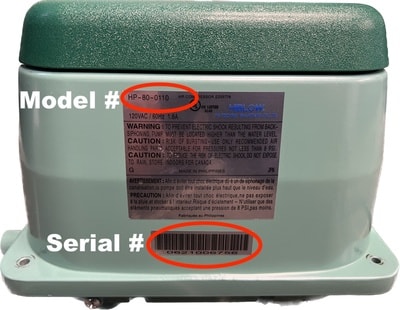
- Replace the pump if necessary. If your pump is older or beyond repair, replace it with the same model or an approved equivalent with matching airflow and pressure specifications. Proper airflow is essential for effective wastewater treatment.
Need assistance? Contact HIBLOW USA at 734-944-5032 or info@hiblow-usa.com for troubleshooting, rebuild kits, replacement pumps, or help locating a distributor.
To purchase rebuild kits and other spare parts, visit our online store: https://shop.hiblow-usa.com/


