



Monday, January 17, 2022

Possible causes of your septic air pump with alarm or external alarm panel sounding


The diaphragms have ruptured inside of the pump

When the diaphragms rupture, the safety switch mechanism cuts power to the pump to prevent the magnetic rod from destroying other components.  Check out rebuild videos on our support page which will walk you through how to access the diaphragms and rebuild the pump if necessary.  You can also contact a service provider for the rebuild.  https://www.hiblow-usa.com/support/

 Your septic tank has been pumped recently

When this happens, the water depth is lowered, which limits backpressure on the system.  This can cause the alarm to sound, but usually rectifies itself in a couple of days as wastewater enters the system and the water level rises to normal levels.

The umbrella valves in the pump casing blocks have worn out. 

The umbrella valves inside the casing blocks (that attach to the diaphragms) wear over time.  If your pump has been rebuilt previously and only the diaphragms have been replaced, the valves can wear, causing the pump to lose pressure.  HIBLOW recommends always installing the complete rebuild kit to prevent this issue.

 Read the full article about troubleshooting your HIBLOW septic air pump with alarm on our website!

If you have further questions about your HIBLOW septic air pump with alarm, please give us a call or send us an email.  We’ll be happy to help you troubleshoot and set you up with an authentic HIBLOW distributor if parts are needed.

Friday, January 14, 2022

What Causes Your Septic Air Pump Alarm to Ring, and What to Do About It

A HIBLOW septic air pump is considered by many to be the “heart” of an aerobic onsite system.  It’s critical that it runs 24/7, 365, but, at some point, the air pump will stop running, usually because the diaphragms have ruptured after years of use. 

To notify the homeowner, OEMs incorporate some type of low-pressure alarm in their system that triggers when the PSI drops below 1. The alarm can be attached to the electrical panel on your house, or on the pump itself.  The air pump is often the cause, but there are other conditions that can sound the alarm.


When your alarm sounds, typically it’s best to mute the buzzer so that you don’t annoy your neighbors! On your HIBLOW septic air pump with alarm, simply move the switch on the alarm (to the left) to mute and contact your service provider immediately. Whatever you do, don’t mute and forget about it!

Over time, your tanks can settle, and the pressure may break the airline where it enters the tank.

If you have further questions about your HIBLOW septic air pump with alarm, please give us a call or send us an email.  We’ll be happy to help you troubleshoot and set you up with an authentic HIBLOW distributor if parts are needed. 

Read the full article about troubleshooting your HIBLOW septic air pump with alarm on our website!

Friday, December 17, 2021

Pond Aerator for Fish Kill Prevention Set-up Tips

Why aeration in the winter is critical to the health of a pond:

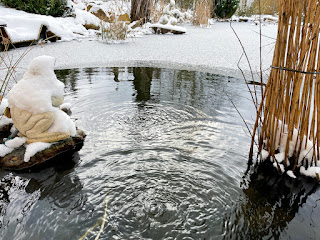
When a pond owner buys a linear air pump, it is often in the spring or summer when they are looking to beautify the water and/ or enhance fish growth. Yet the most important season for aeration may be the winter. Sub-surface aeration is essential for cleaning up autumn debris, preventing winter fish kill, and disrupting the formation of ice.


Why subsurface aeration?

Subsurface aeration is an energy efficient and highly effective way of increasing dissolved oxygen levels and circulating it through the pond. The circulation creates an opening in the ice which allows the deadly gasses to be released, and for sunlight to reach aquatic plants. There is no better way to keep your fish alive and continue the decomposition of organic material while at the same time offering an opening in the ice for wildlife to stop by.

It’s important to move the diffuser away from the deepest part of the pond. If you have a six-foot deep pond, move the diffuser closer to the shore to a depth of about three feet.

The warmest water in the pond is at the bottom and is where fish reside in the winter. If the diffuser is placed at the deepest part of the pond, it will circulate the warm water and evenly distribute the cold water – disrupting the natural habitat.

Moving the diffuser closer to the surface also makes it easier to create a hole in the ice and makes the pond safer for humans or animals. They can more easily get out of the pond if they were to fall in through the hole in the ice.

If possible, it’s best to keep your aerator in a warm building or under some type of shelter. Pumping warm air into the pond will actually increase positive results.

Read the full article about using a pond aerator for fish kill prevention during winter on our website!

Choose HIBLOW for Pond Aeration

We’ve manufactured air pumps for the pond and aquatic industries for over 30 years. We know that reliability, energy efficiency, and low sound levels are all extremely important for your aquatic systems. Whether you’re aerating tanks on fish transport vehicles, operating a commercial fish farm, or just keeping your backyard pond in a healthy condition—you can depend on our HP and XP series pumps for your application.

Contact us today to find the best pump for your application!


Wednesday, December 1, 2021

Pond Aerator for Fish Kill Prevention


Fish kill is a common occurrence in many northern states during the harsh, cold winters. 

As the temperature falls, ice can form across the entire pond and stay for months. 

This sets off a chain of events that can deplete oxygen levels and ultimately suffocate fish. Let’s dive into the science behind the reduction in dissolved oxygen levels and provide a simple solution to keep your fish alive and healthy.

Subsurface aeration: a quick and easy solution

Subsurface aeration – or bottom diffused aeration – is an energy efficient, quiet, and highly effective process of increasing dissolved oxygen levels and circulating water throughout the pond.

Creates an opening in the ice

One of the advantages of subsurface aeration in any season is that it mixes the pond from the bottom up – evenly distributing oxygen and helping the pond turn over.

As the pond turns over, water reaches the surface and absorbs oxygen. In the winter, water circulation helps create a hole in the ice. This allows for the deadly gases to escape, for sunlight to reach aquatic plants, and for water to reach the surface and receive oxygen from the atmosphere.

Adds dissolved oxygen

The tiny bubbles that are diffused with subsurface aeration infuse oxygen into the water column from the bottom up. This not only provides dissolved oxygen for fish, but it feeds aerobic (beneficial) bacteria, which can continue to consume the organic matter throughout winter. This should make for less cleanup and a clearer pond in the spring.

Read the full article on a pond aerator for fish kill prevention during winter on our website!

Monday, November 15, 2021

Why Aeration is Essential to a Healthy Aquaponics System


"Quality air pumps are an irreplaceable component of aquaponic systems, and many systems have been saved from catastrophic collapse because of an abundance of DO." ~Food and Agriculture Organization of the United Nations

What is aquaponics?


Aquaponics combines aquaculture (raising fish in tanks) and hydroponics (growing vegetables/ plants in water with a soil-less media).

This balanced, self-contained, and natural process mimics the ecosystems of rivers, lakes, ponds, and waterways on the planet yielding 100% organic fish and vegetables.

How does it work?


The three living components that drive the closed loop system are fish, beneficial bacteria, and plants - the only outside input is fish food. Fish naturally excrete urine and feces into the tank, and their waste is high in ammonium and can become highly toxic.  

Therefore, the water in the tank is pumped to a biofilter, which is loaded with beneficial bacteria. The beneficial bacteria – which are fed by oxygen from an air pump – breaks down the ammonia into nitrates. The water is then pumped to soil-less media bed (hydroponics) where the nitrates act as a fertilizer to the plants. The plants remove the nitrates from the water (purifying it), and the clean water then returns to the fish tank to complete the loop.

Simply put, without proper dissolved oxygen levels, aquaponics would fail.  Fish require oxygen to survive, grow, and multiply.  Beneficial (Aerobic) bacteria need oxygen to live and multiply in the biofilter.  Without the bacteria, the fish wouldn’t absorb the fertilizer needed to grow.  Therefore, a reliable air pump is essential and a quality diffuser is important.  

Professionals recommend a “fine bubble” diffuser which creates more bubbles and thus more surface area on the bubbles for oxygen to transfer into the water. It’s imperative to check the diffusers regularly, so they don’t clog.    

Read the full article on our website to learn more!

HIBLOW Linear Diaphragm Air Pump Advantage


Many professionals believe that a linear diaphragm air pump is the best technology for aquaponics because the design is built for 24/7, 365-day use.  The pumps are energy efficient, running on less electricity than an incandescent light bulb.  They’re also quiet – producing a noise level far less than a normal conversation.  A HIBLOW linear diaphragm air pump handles higher pressures so users can manifold 2+ airlines to aerate the fish tank and biofilter. Finally, the pumps can be easily rebuilt 2 times for an overall life of 12+ years in many cases.

Monday, November 1, 2021

Sustainable Farming with Aquaponics


Aquaponics combines aquaculture (raising fish in tanks) and hydroponics (growing vegetables/ plants in water with a soil-less media).

This balanced, self-contained, and natural process mimics the ecosystems of rivers, lakes, ponds, and waterways on the planet yielding 100% organic fish and vegetables.

What are the benefits of aquaponics?


  • Since aquaponic systems can be installed indoors, food can be produced anywhere and throughout the entire year
  • The biological cycle is 100% chemical-free and does not require pesticides or herbicides  
  • Since aquaponics is a closed loop system, it uses ~90-95% less water than traditional farming methods
  • The food produced has more nutrients and generally is thought to taste better
  • Vegetables tend to grow 3x faster because of their exposure to 100% natural nutrients, 24 hours a day
  • Food independence


Want to learn more? Read the full article about aquaponics on our website!

HIBLOW Linear Diaphragm Air Pump Advantage


Many professionals believe that a linear diaphragm air pump is the best technology for aquaponics because the design is built for 24/7, 365-day use.  The pumps are energy efficient, running on less electricity than an incandescent light bulb.  They’re also quiet – producing a noise level far less than a normal conversation.  A HIBLOW linear diaphragm air pump handles higher pressures so users can manifold 2+ airlines to aerate the fish tank and biofilter. Finally, the pumps can be easily rebuilt 2 times for an overall life of 12+ years in many cases. Contact us today!

Visit HIBLOW USA at the 2026 FOWA Convention & Trade Show

  HIBLOW USA is excited to exhibit at the 2026 Florida Onsite Wastewater Association Convention & Trade Show, August 6–8 at the Ocean Ce...